
Window Replacement Albuquerque
Albuquerque is Winwood's home town. We replace windows and doors in Heights ranches, Westside two-stories, valley adobes and Nob Hill classics, and we finish the stucco and trim so the house looks like it came that way.
Call (505) 481-8634- Free measure at your home
- Written price per window
- Retrofit or full-frame
- Stucco and trim finished
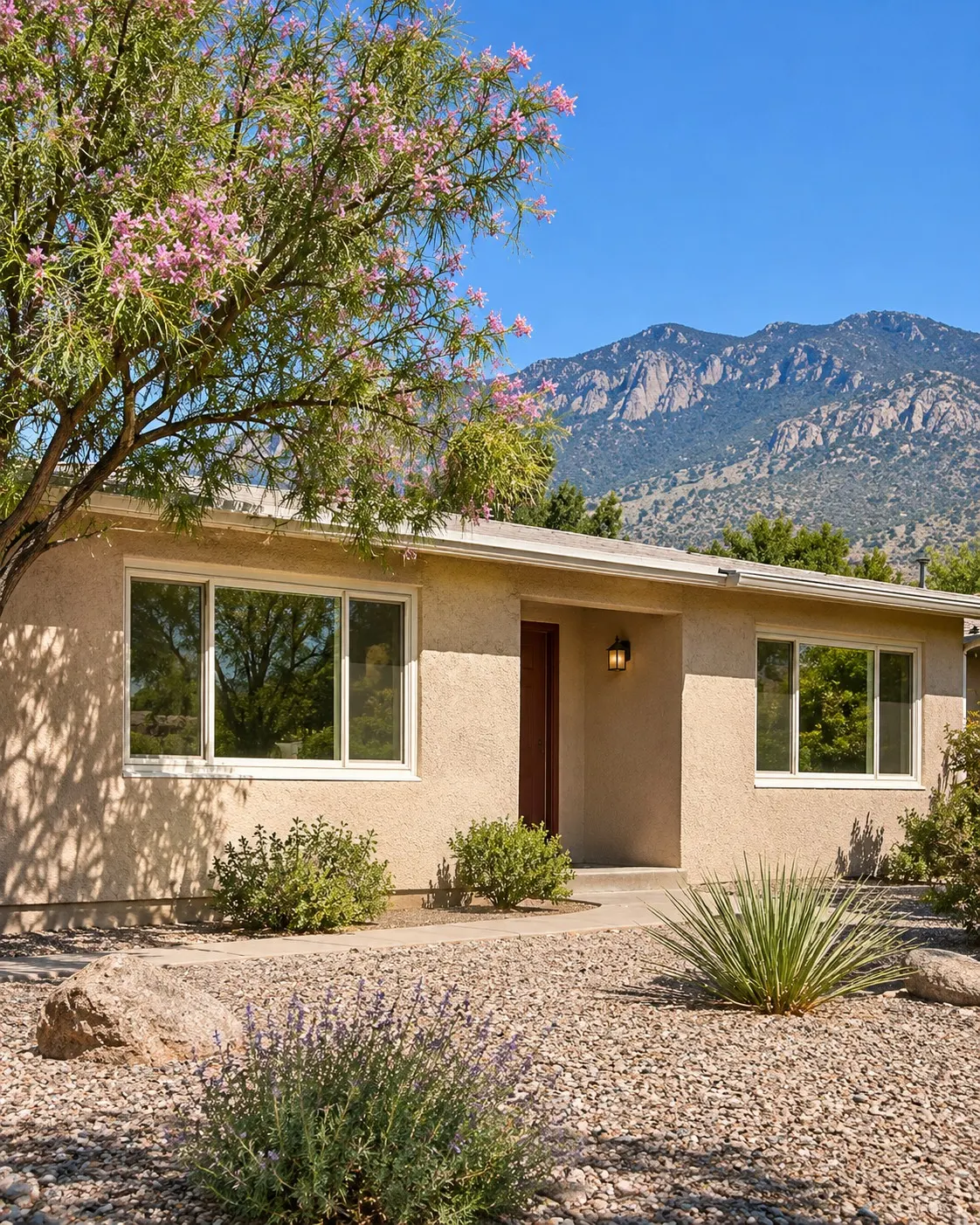
The Winwood crew in Albuquerque
Winwood Windows & Doors started here, and this line covers the whole metro: the Heights up to the foothills, the Westside mesa, both valleys, and the older neighborhoods in between. When you call, you reach the people who measure, order and install. There's no call center and no sales team handing your job off to strangers.
We do one category of work: replacing windows, patio doors and front doors, and finishing the walls around them. That means we've seen nearly every kind of window this city was built with, from steel casements in 1940s Nob Hill bungalows to the vinyl sliders in Westside subdivisions, and we know what each one needs when it comes out.
Albuquerque is also a tough place to be a window. The sun at five to six thousand feet is fierce, spring winds blow dust through any gap, summer storms can drop hail, and January nights are colder than visitors expect. Windows that last here are chosen and installed with all of that in mind.
What we replace
Window replacement
Any number of windows, any style, measured and priced one by one.
WindowsOld aluminum windows
The sweating, rattling sliders found all over the Heights.
AluminumSteel casements
Keeping the look of classic mid-century windows, losing the drafts.
Steel casementsStucco full-frame
Old frame out, opening rebuilt and flashed, stucco matched.
Full-frameInsert windows
A new window inside a sound old frame, with no wall work.
InsertsLow-E glass
Coatings picked for each side of the house.
GlassPatio doors
Sliders and French doors that roll easily and seal tight.
Patio doorsFront doors
Entry doors built for west sun and spring wind.
Entry doorsA city built in waves, with windows to match
Albuquerque grew in distinct bursts, and you can almost date a neighborhood by its windows.
- Before 1950: Old Town, Downtown, Huning Highlands, the Fourth Ward and the valleys. Wood double-hungs, adobe walls with wood bucks, and early steel casements.
- 1940s to 1960s: Nob Hill, the University area, and the first ring of the Heights. Steel casements, wood windows, and early aluminum.
- 1960s to 1980s: the big build-out of the Northeast Heights, Four Hills and much of the Southeast. Mill-finish and bronze aluminum sliders, often single-pane.
- 1990s to today: the Westside, the far Northeast and the foothills. Builder vinyl, and in custom homes, clad wood and early fiberglass.
Each era fails in its own way. Steel rusts at the bottom rail. Old aluminum sweats and leaks air. Early vinyl yellows and loses its seals. Builder-grade clad windows chalk and fade. Knowing what we're looking at tells us what's likely hiding behind it.
How a Winwood job goes
- You call {PHONE}. We'll ask a few questions and set a visit, usually within the week.
- The walk-around. Every window and door, inside and out. We look at the frame, the stucco around it, and any signs of water.
- Measurements. Several per opening, plus diagonals. Old Heights houses in particular aren't always square.
- The options talk. Frames, colors, glass and install methods, with samples you can hold.
- Your written quote. Every window has its own line: room, size, product, glass, install method and finish work.
- Manufacturing. Your windows are built to size. We'll give you a real delivery estimate and call when they land.
- Install day. Floors covered, one opening at a time, each one sealed before the next is opened.
- Finish and walk-through. Trim, sealant and stucco. We operate every sash and lock with you before we leave.
Insert or full-frame: what's right for your house
Insert (retrofit) replacement keeps the old frame in the wall. The sashes and glass come out, the frame is cleaned and checked, and a new window is set inside it, with a flange covering the old frame on the outside and foam sealing the gap. No stucco is cut, the job moves fast, and the price is lower. You give up a little glass area, and the framing behind the old window stays hidden.
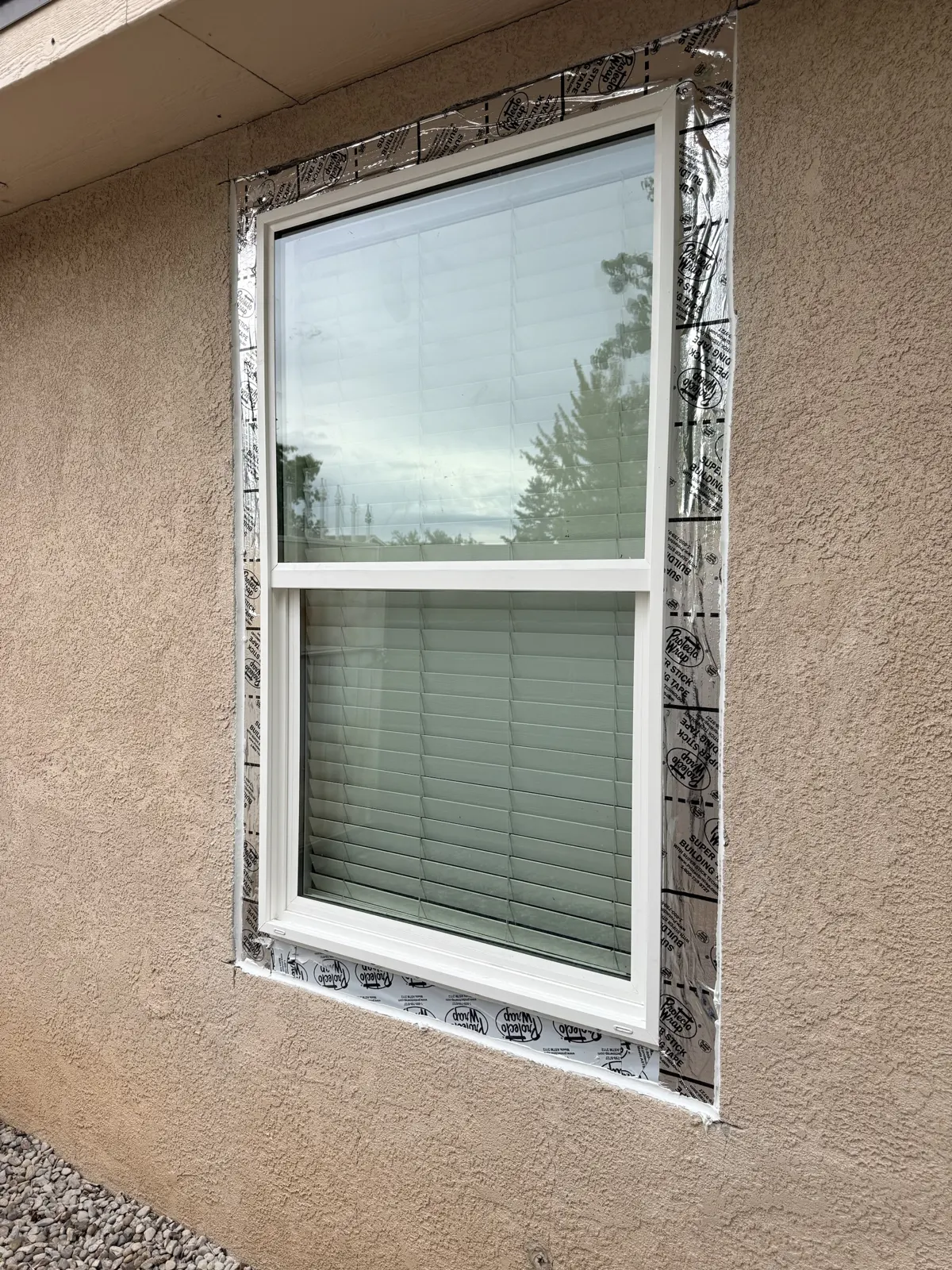
Full-frame replacement removes everything. Stucco is cut back around the window, the old nail-fin frame comes out, and the framing is inspected and repaired if needed. The opening gets new waterproofing: a sloped sill flashing, then self-adhered tape over the new window's fins, lapped in the right order. New lath and stucco follow, with a color coat matched to the wall. It costs more and takes longer, and it's the only real fix for a window that's been leaking.
Many Albuquerque homes get both. Sound, dry frames get inserts. The kitchen window that's stained the drywall, or the bedroom slider with the cracked frame, gets full-frame. Your quote marks which is which.
| Insert | Full-frame | |
|---|---|---|
| Wall work | None outside; trim adjusted inside | Stucco cut, re-flashed, patched and color-matched |
| Glass area | Slightly reduced | Kept, or enlarged |
| Hidden damage | Not visible | Exposed and fixed |
| Time | Fast | Longer, plus stucco curing |
| Price | Lower | Higher |
Real Winwood work
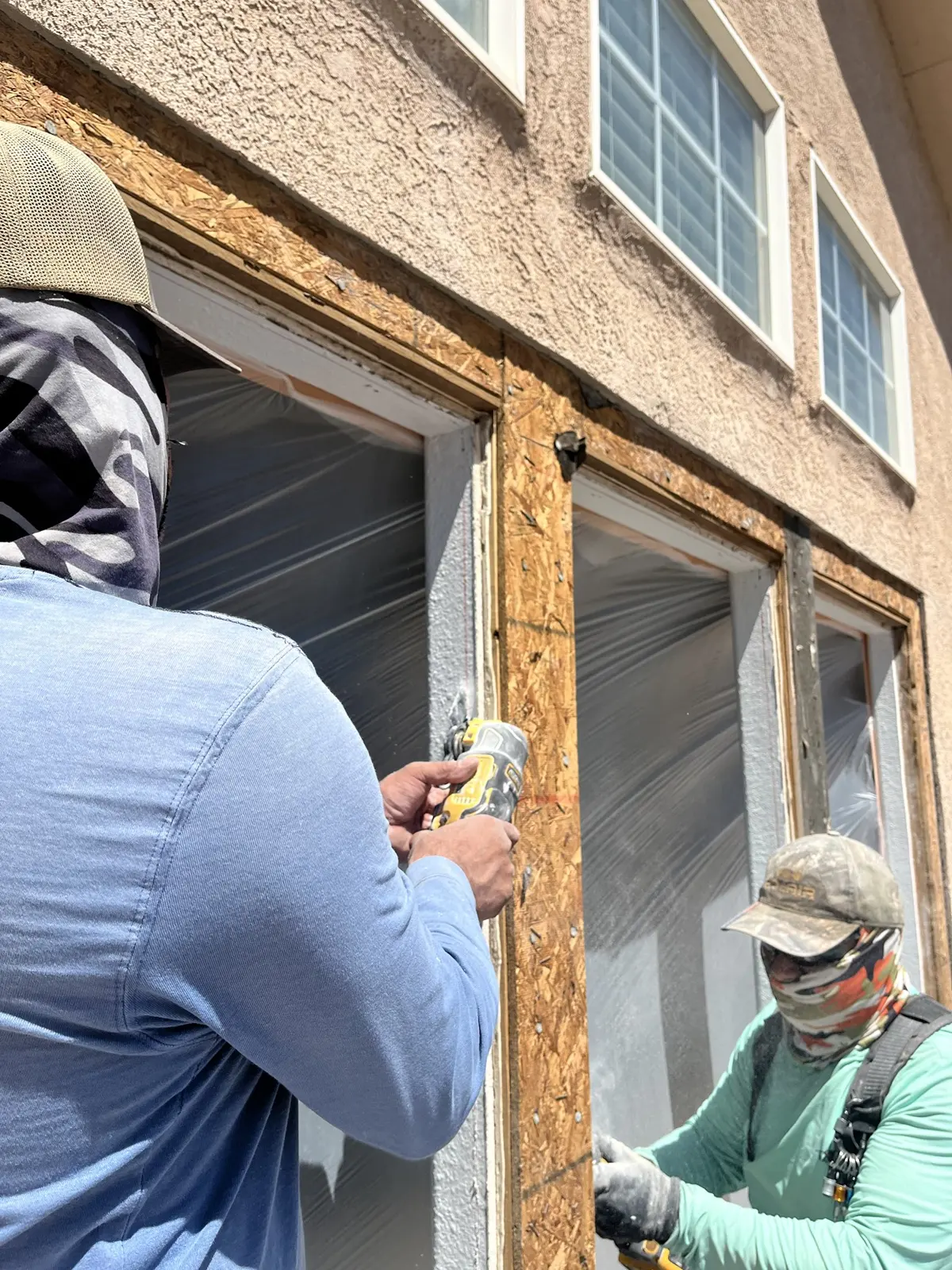
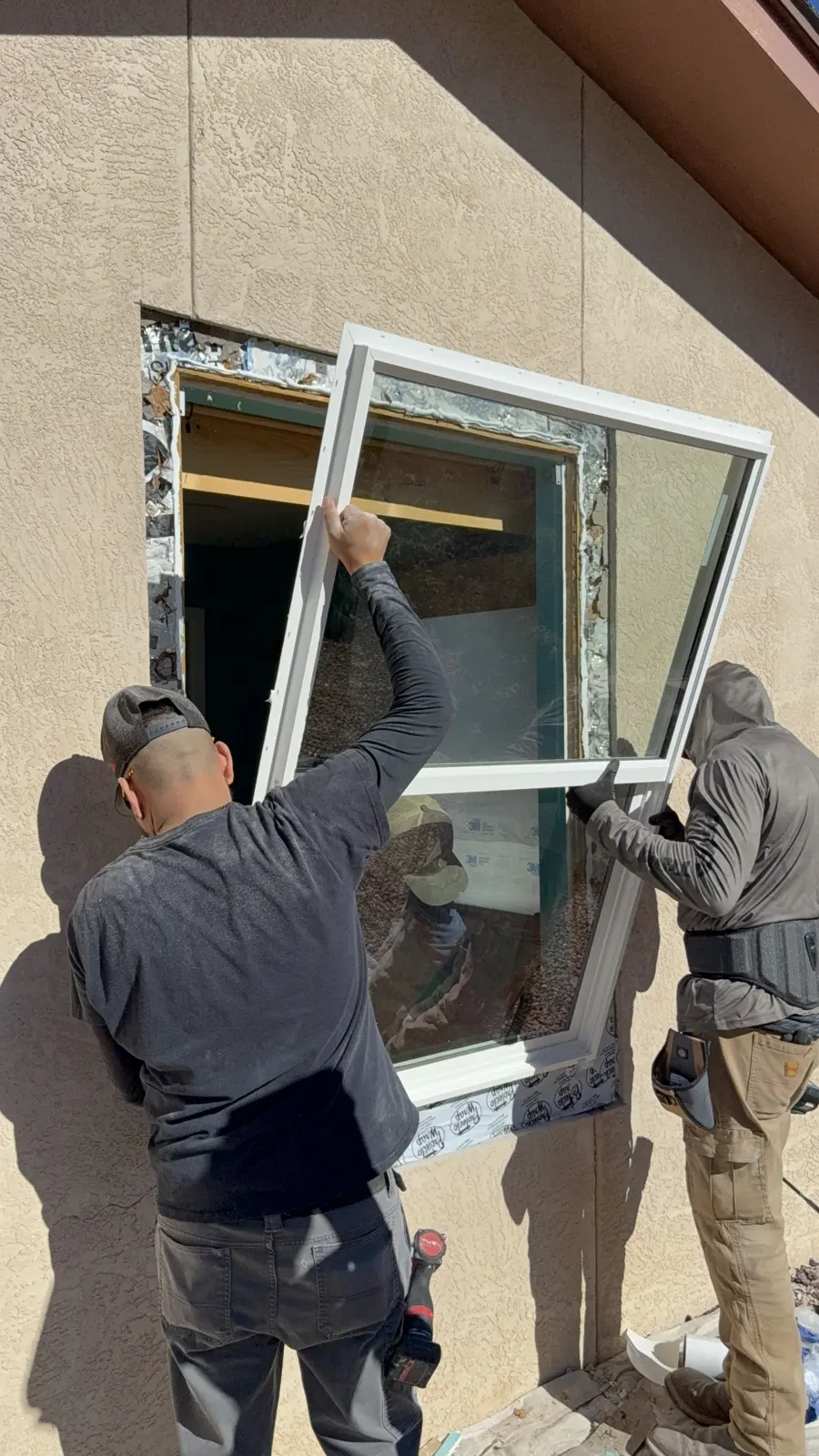
These are our crews' own photos: old frames cut out down to the sheathing, a new window lifted into place, and an opening wrapped in self-adhered flashing before the stucco crew closed it up. You won't see this part once the job is done. It's the part that keeps your walls dry.
Albuquerque weather, window by window
Sun
Albuquerque gets a lot of clear days, and at this elevation the sun is intense. West-facing glass can make a room miserable from mid-afternoon on. Old aluminum frames heat up and radiate it inside. Dark vinyl that isn't built for it can warp. Low solar heat gain glass on west and south walls, and frame materials rated for the sun, solve most of that.
Wind and dust
Spring wind season fills sliding tracks with grit and pushes fine dust through worn weatherstrip. Casements and awnings, which seal by compression, hold up best on the windiest walls. Sliders need good interlocks and tracks that clean out easily.
Hail
Spring and summer storms can bring hail, especially across the Heights and the Westside. Screens take the brunt of it, and older single-pane glass can crack. Modern insulated glass is more resistant, and screens are inexpensive to replace if they're dented.
Cold nights
Winter nights regularly drop well below freezing, especially in the valleys and up toward the foothills. Single-pane and failed dual-pane windows frost on the inside. Insulated glass with a low U-factor and warm-edge spacers keeps the inside pane warm and dry.
Frame materials we install
Vinyl is the workhorse of Albuquerque replacement windows. Good vinyl, with welded corners, a stiff multi-chamber frame and quality hardware, insulates well, never needs paint, and fits most budgets. White, almond and tan hold up best in the sun.
Fiberglass is our pick for dark exterior colors, big view windows, and west walls where the frame needs to stay perfectly stable. Slimmer frames mean more glass.
Wood-clad windows bring real wood inside with protected cladding outside, the right choice for historic homes in Old Town, Huning Highlands and the valleys, and for anyone who loves stained wood trim.
Composite lines blend wood fiber and polymer for a stable, low-maintenance frame, available in darker colors. Some popular national brands build their mid-range lines this way.
We'll recommend a material for each wall based on sun, style and budget, and show the price difference on your quote.
Glass, explained in one minute
Look for the NFRC sticker on any window. Two numbers matter most here:
- U-factor (heat loss): lower keeps winter heat inside.
- SHGC (solar heat gain): lower keeps summer sun heat outside.
On a typical Albuquerque house, we lean toward a low SHGC on west and south windows, a balanced coating on east windows facing the Sandias, and the lowest practical U-factor on north windows and bedrooms. All of it is built for our elevation, so the glass seals aren't stressed.
Patio doors and front doors
The back slider in most Albuquerque houses works harder than any window, and wears out sooner. When it starts to grind, stick or leak air, a new door with fresh rollers, a dust-shedding track, a multi-point lock and a sealed sill pan underneath fixes it all. We also install hinged French doors, which seal especially well in the wind.
West-facing front doors fade, warp and stop sealing. A fiberglass entry door holds its finish, insulates far better than wood or thin steel, and closes tight. Sidelites and transoms can brighten a dark entry.
Neighborhoods we serve
Northeast Heights
Ranch homes and aluminum sliders.
Foothills
Big views, big glass, design rules.
Westside
Builder vinyl and west sun.
North Valley & Los Ranchos
Adobes, acequias and cottonwoods.
Nob Hill & University
Steel casements and Pueblo Revival.
Old Town & Downtown
Historic homes and overlay zones.
Four Hills & Southeast
1960s homes near the mountains.
South Valley
Valley homes, farms and family compounds.
An everyday Albuquerque example
A 1976 single-story stucco house near Montgomery and Juan Tabo. Thirteen original bronze aluminum sliders, single-pane, plus an aluminum patio door. The owners mention three things: the living room is freezing in January, the west bedroom is unbearable in July, and the patio door takes two hands to open.
At the visit, eleven frames are sound and square, good insert candidates. Two, the kitchen window and the west bedroom, show stucco cracks and stains below the corners, so those get full-frame replacement with new flashing. The owners like the dark look, so we quote bronze exteriors in a material rated for sun. West and south windows get low solar gain glass; north windows get a lower U-factor package. The patio door is replaced on a new sill pan.
The windows arrive a few weeks later. Inserts go in over two days, the two full-frame openings get their base coat right away and their color coat after curing, and the patio door is done in an afternoon. The January chill and the July oven are gone, and the door slides with a finger.
Before you sign with anyone
- Make sure every window was measured, not estimated.
- Get the product line name and the NFRC numbers for each window type.
- Know which openings are insert and which are full-frame, and why.
- Confirm who patches the stucco and whether the color coat is included.
- Ask who handles interior trim and drywall returns.
- Separate the manufacturer's warranty from the installer's labor warranty.
- Ask what happens if damage is found inside the wall.
- Be wary of "today only" pricing and any pressure to sign on the spot.
We put all of this in writing, and we're happy to go through another company's quote with you line by line.
Keeping new windows in good shape
- Vacuum sliding tracks after wind storms. Grit is the number one wear item.
- Keep the weep slots on the outside bottom of each frame clear.
- After a hail storm, check screens. Bent frames and torn mesh are easy, inexpensive fixes.
- Clean frames with mild soap and a soft cloth.
- Look at the outside sealant on west and south walls every couple of years.
Something off after install? Call (505) 481-8634 and we'll come take a look.
Repair or replace: a quick guide
| Problem | Likely cause | Usual answer |
|---|---|---|
| Sash drops when you let go | Worn balance | New balances |
| Slider grinds | Worn rollers or a gritty track | Clean and re-roller, or replace if the track is damaged |
| Haze between the panes | Edge seal failure | New glass unit or a new window |
| Water dripping off a metal frame in January | Uninsulated aluminum | Replace the window |
| Stained drywall below the sill | Water entering around the frame | Full-frame replacement |
| Rusted bottom rail on a casement | Old steel | Replace, keeping the look |
When only one or two windows show these signs, we'll fix those. When the whole house does, replacing everything at once saves on setup, stucco work and trips.
Scheduling through the year
Winter installs work fine in Albuquerque, since openings are only open for minutes, though stucco finishing waits for days above freezing. Spring brings wind, so we plan exposed walls for calmer mornings. Summer is ideal for stucco curing. Fall is the busiest season, so book early. Since windows are built to order, call (505) 481-8634 a month or more before you'd like the work done.
Brands we install
We aren't tied to a single manufacturer. Albuquerque jobs commonly use window and door lines from Andersen, Pella, Milgard and AMSCO, among others. A straightforward vinyl replacement might use one line; a dark-framed view window, another; a historic wood-clad job, a third. We'll explain each recommendation, and we're happy to quote a brand you already have in mind.
Trademarks belong to their respective manufacturers.
Albuquerque window questions
How soon can you measure my Albuquerque home?
Usually within the week, depending on the season. Call (505) 481-8634 to set a time.
How long does installation take?
After the windows arrive, an insert job of ten to fifteen windows typically takes one to two days. Full-frame openings add time, since the stucco has to cure before its color coat.
Do you work in Los Ranchos and the South Valley?
Yes, along with the rest of the metro: the Heights, the foothills, the Westside, the North Valley, Nob Hill, Old Town and the Southeast.
Can you replace steel casement windows?
Yes. Slim fiberglass or aluminum-clad casements can keep the mid-century look with far better insulation.
Do I need a permit?
It depends on the scope and whether you're in the city, the county or a village like Los Ranchos. Same-size swaps are usually simple; resized openings and historic properties need more. We check before ordering.
Is the estimate free?
Yes. The visit and the written quote cost nothing.
Can you replace windows in winter?
Yes. Each opening is open only briefly. Stucco finish work on full-frame openings waits for days above freezing.
Get your Albuquerque windows measured
Free in-home visits from the Westside to the foothills and down the valley.